Swords · 3
Three of Swords
Updated 9/3/2026Upright
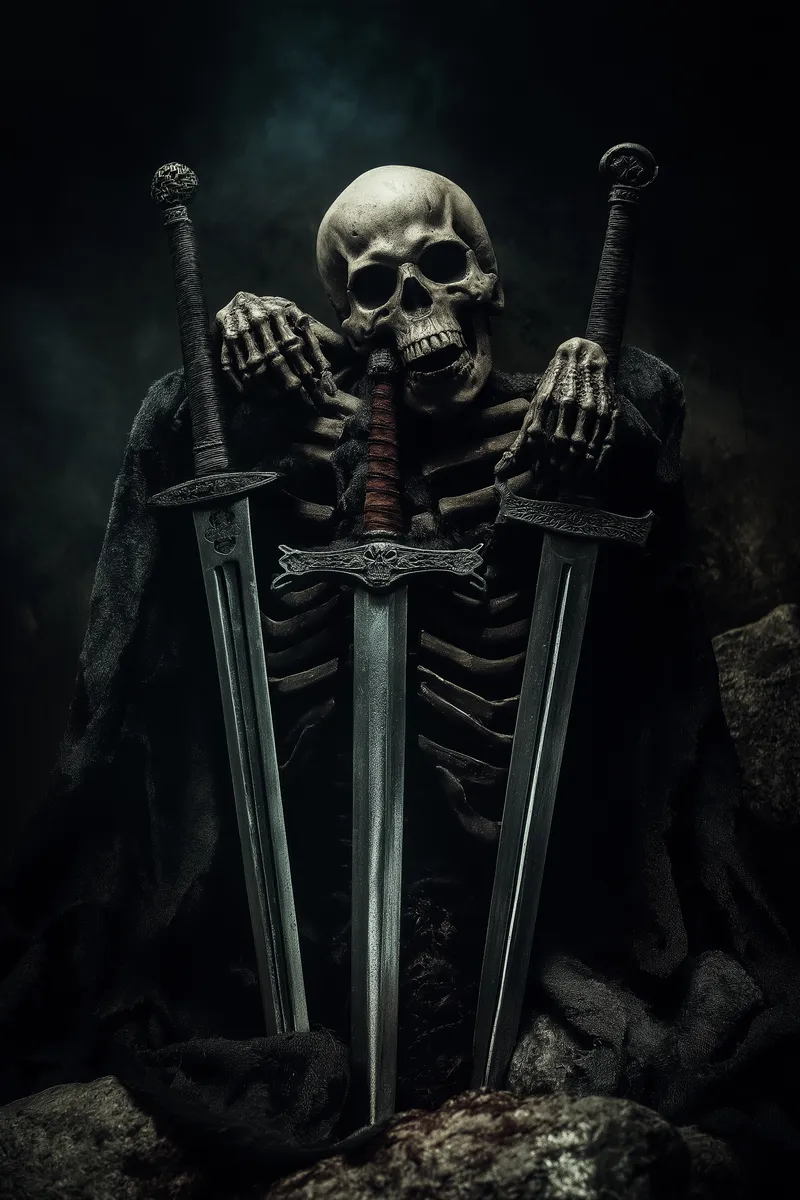
The skeleton in the image is no longer bleeding, but the three swords remain around it: one in its mouth and two beneath its hands, like weapons, memorials, or crutches. The Three of Swords depicts not only the moment of pain, but what remains of the damage after the first strike is over. The event, the wound, and its present consequence are different things. Separate them so an old blade does not get to explain everything you feel today. First, name what actually happened and what was lost: a person, trust, an imagined future, or your understanding of yourself. Stop ongoing harm before searching for a lesson or forgiveness. Grief needs a witness, rest, and practical care; it does not need a beautiful purpose to be legitimate. Time does not heal anything by itself. It merely provides more days to do the work—or to build pedestals for the swords.
Reversed
Reversed, the wound may no longer be open, yet the hands still grip the blades around which life was arranged. Healing may feel like betrayal: If the pain eases, did the loss not matter, did the person who caused harm get off too easily, or who are you without the familiar story? At other times, the movement is in the opposite direction: grief has merely been numbed, packed neatly away, and labeled processed. Silence alone does not reveal whether the wound has closed or sensation has disappeared. Look for one small sign that your capacity is returning: Are you sleeping, able to concentrate, becoming curious again, or no longer compelled to prove the event in every conversation? Letting go does not require forgetting, forgiveness, or renewed contact. Put down one sword at a time: stop one checking behavior, one argument rehearsed in your mind, or one ritual that keeps the damage permanently present. The scar may remain. It no longer has to hold up the entire skeleton.