Swords · 10
Ten of Swords
Updated 9/3/2026Upright
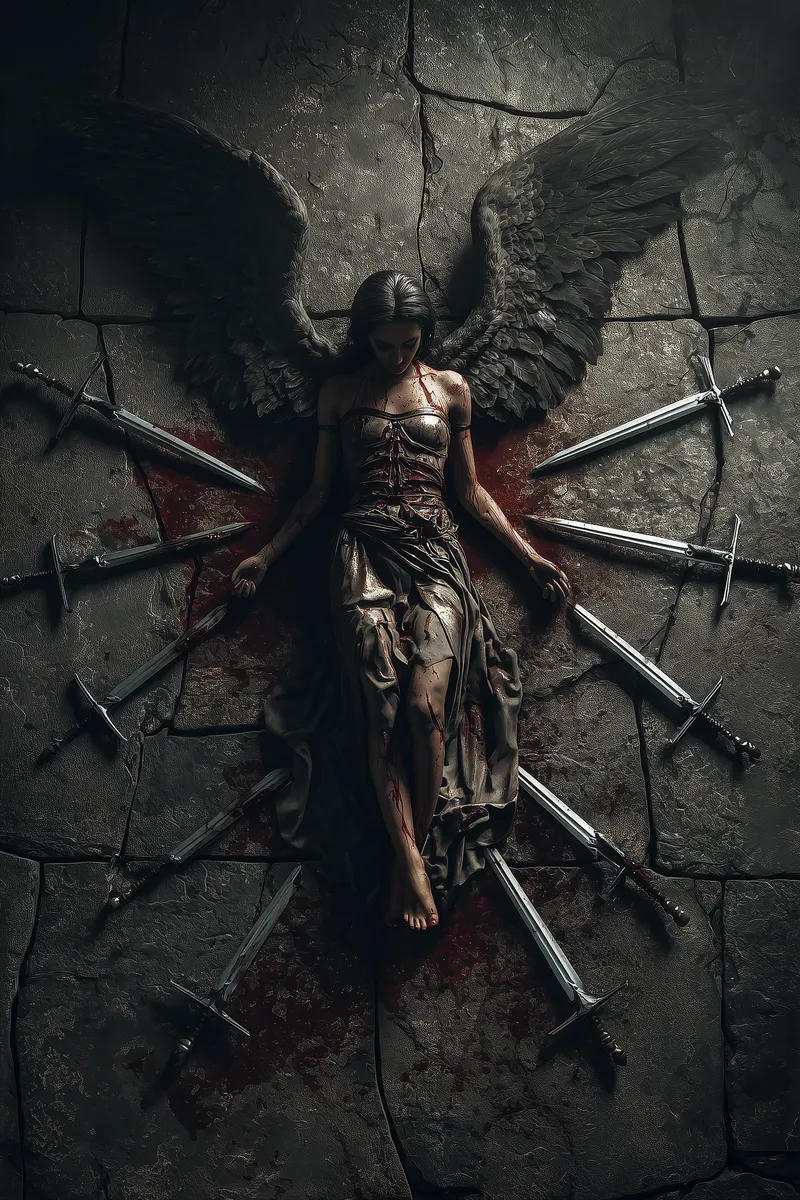
A winged woman lies on cracked stone, with ten swords pointing around her like the cold record of a scene already over. They no longer threaten a future strike. Something has broken: a plan, trust, status, or the belief about how this was supposed to end. The Ten of Swords does not promise that the worst is certainly over or that the only direction is up. It says the same loss should no longer be called unfinished potential. Assess the damage first: what ended, what needs protection, and what survived? Do not demand a lesson, gratitude, or a dramatic comeback from yourself before first aid. If the situation involves violence, a medical emergency, or thoughts of harming yourself, contact emergency services or crisis support now. Even an angel's wings may rest on the floor for a while; they do not have to prove anything while bleeding.
Reversed
Turned around, the figure may seem to rise—or to fall back toward the blades. Reversed, the Ten of Swords describes both the beginning of recovery and an ending that has not yet been accepted. Actions reveal the difference: is the damage decreasing, is function returning, and is a new structure forming, or is the same crisis continuing under another name? Recovery is not a return to who you were before the blow. It is arranging life around the knowledge the event left behind. Give body and mind time, but watch concrete signs. If the wound does not settle, seek appropriate help instead of calling constant pain the new normal. If something truly ended, do not revive it merely because silence feels empty. Not everything that returns from the dead is a miracle; sometimes it is the same problem without a proper burial.