
Coins · 10
Ten of Coins
Updated 9/4/2026Upright
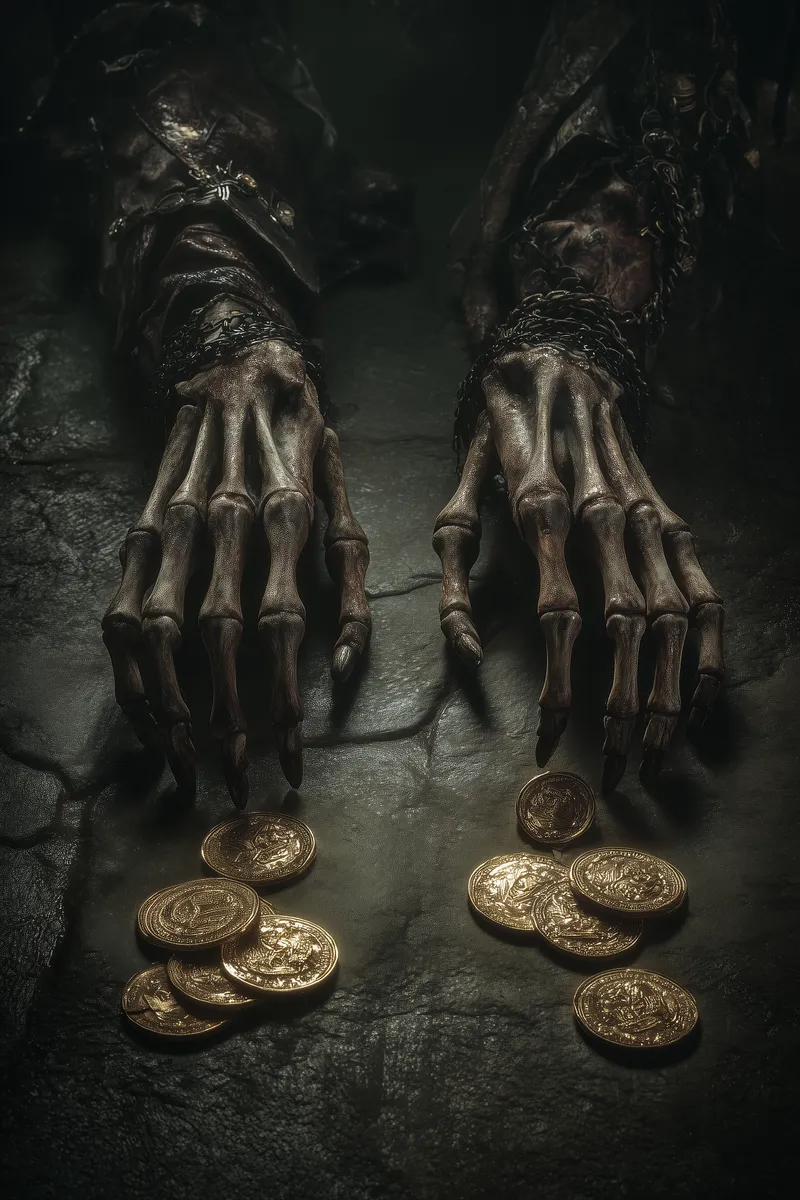
Two skeletal hands reach toward two piles of coins. The division appears orderly, but a chain runs around both wrists. Property can change owners in a moment; its history, maintenance, and conditions follow much more slowly. The Ten of Coins concerns continuity beyond one person's lifetime. A durable legacy is not just money or a name, but clear knowledge of what is owned, who decides, what upkeep costs, and whether the next generation may change the structure. Make important things findable: documents, credentials, debts, responsibilities, knowledge, and wishes. Discuss them with the people affected, not merely on their behalf. Preserve traditions that provide security and shared language, but allow the living to review them. Equal division is not always fair if one person receives usable property and another its buried problem. This card does not replace legal or financial advice; use qualified experts for significant arrangements. A good will transfers value. An excellent one does not attempt to transfer the deceased person's authority.
Reversed
Reversed, the coin piles are divided but the chain remains. Old power continues through conditions, secrets, debt, or unfinished conflict. The living reach for property, and the dead hand reaches back. The reversed Ten of Coins describes continuity whose structure cannot withstand inspection. A will may be unclear, shared property undocumented, a family business dependent on one person's knowledge, or tradition used to control belonging. Do not resolve significant inheritance, ownership, or debt questions through tarot. Gather documents, safeguard property, avoid rushed transfers, and obtain independent legal and financial advice. Separate grief, legal entitlement, and moral wishes; all may be real without being the same. If conflict escalates, use written communication or mediation. Family peace is not peace when purchased through one party's silence. The dead hold many opinions and have terrible availability for follow-up questions.