
Swords · 6
Six of Swords
Updated 9/3/2026Upright
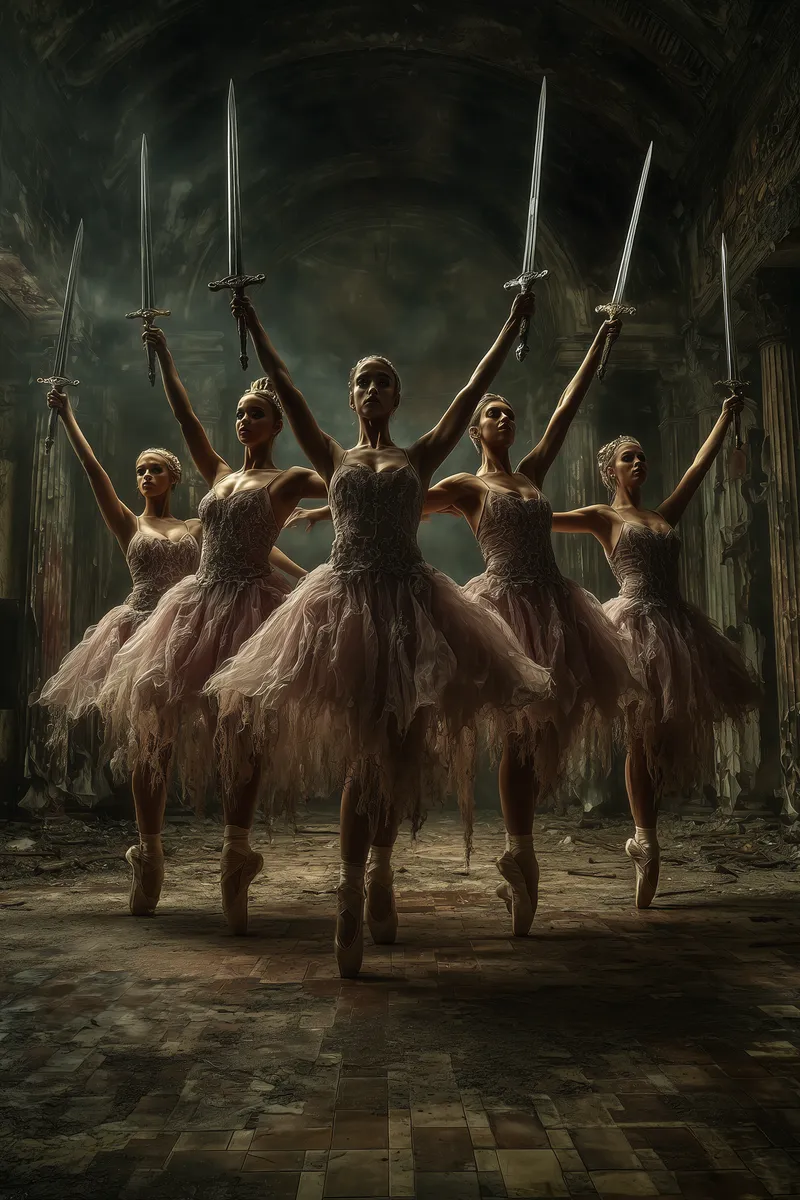
In the image, women advance through a ruined hall in a precise ballet formation, swords raised. No one carries another person in a boat or leaves her weapon on the shore. The Six of Swords depicts a transition accomplished through roles, rhythm, and rehearsal. Grace does not prove the journey is easy; it means a difficult movement has been repeated until direction no longer needs to be negotiated at every step. Define the starting point, the desired new state, and the first checkpoint. Who leads, who supports, what comes along, and what signal will change the plan? Not everything from the past must be discarded. Bring the skill that helped you survive, but not the permanent state of readiness it required. A transition is real when the environment, responsibilities, or daily practice changes—not merely the name of the movement.
Reversed
Reversed, the movement looks impressive while the scenery never changes. Change is rehearsed, presented, and renamed even though responsibilities, power, and daily conditions remain the same. The choreography may also conceal exhaustion: everyone is expected to raise a sword at the same moment, although someone does not know the steps, did not consent to the direction, or already carries other people's weight. A stumble is easily labeled an attitude problem when the fault lies in the tempo. Stop the performance and look for evidence of progress. What is concretely different from a month ago? Who may change the plan, and what happens to someone who cannot keep pace? Remove one ceremonial step and fix one real obstacle. If the destination cannot be named, this may be constant motion rather than transition. It is possible to dance masterfully in ruins and still live in them.