Swords · 9
Nine of Swords
Updated 9/3/2026Upright
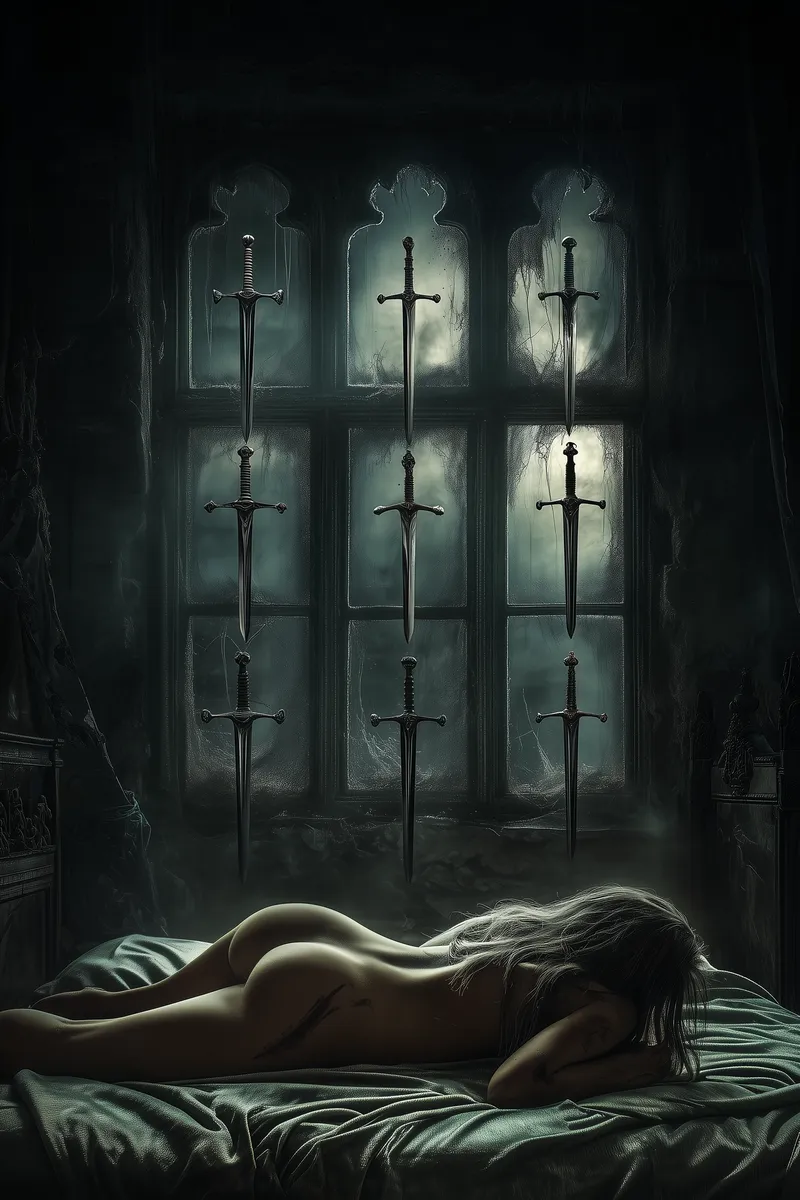
There is a window above the sleeper, but instead of morning, nine swords hang across its panes. The mind has turned every possible way out into a place where danger might enter. It tries to guard you by rehearsing loss in advance—as though suffering would hurt less if you arrived before it did. The Nine of Swords describes worry, shame, or guilt that turns the night into its own courtroom. The feeling is real, but the story it presents is not automatically true. Separate what happened, a possible risk, and the sentence passed by your mind. If you caused harm, seek a repairing action; if the danger is real, seek safety; if the same cycle repeatedly takes your sleep or ability to function, seek professional help. No one becomes sharper by staying awake forever. Eventually, only the swords do.
Reversed
The darkness beyond the window begins to lighten, and the first sword loses its shadow. Reversed, the Nine of Swords can mean that worry has finally found words, support, or its true proportions. It can also describe false quiet: you stopped listening to the alarm because you could no longer bear its sound. What matters is not whether you feel relief today, but what is happening beneath it. If you have spoken, rested, repaired a concrete mistake, or received help, you are dismantling the nighttime court. If you smile by day while your body holds the same trial every night, the matter still needs a listener. Recovery does not require proving that the worry was pointless. It requires that worry no longer gets to decide the charge, verdict, and punishment alone.