
Swords · 12
Knight of Swords
Updated 9/3/2026Upright
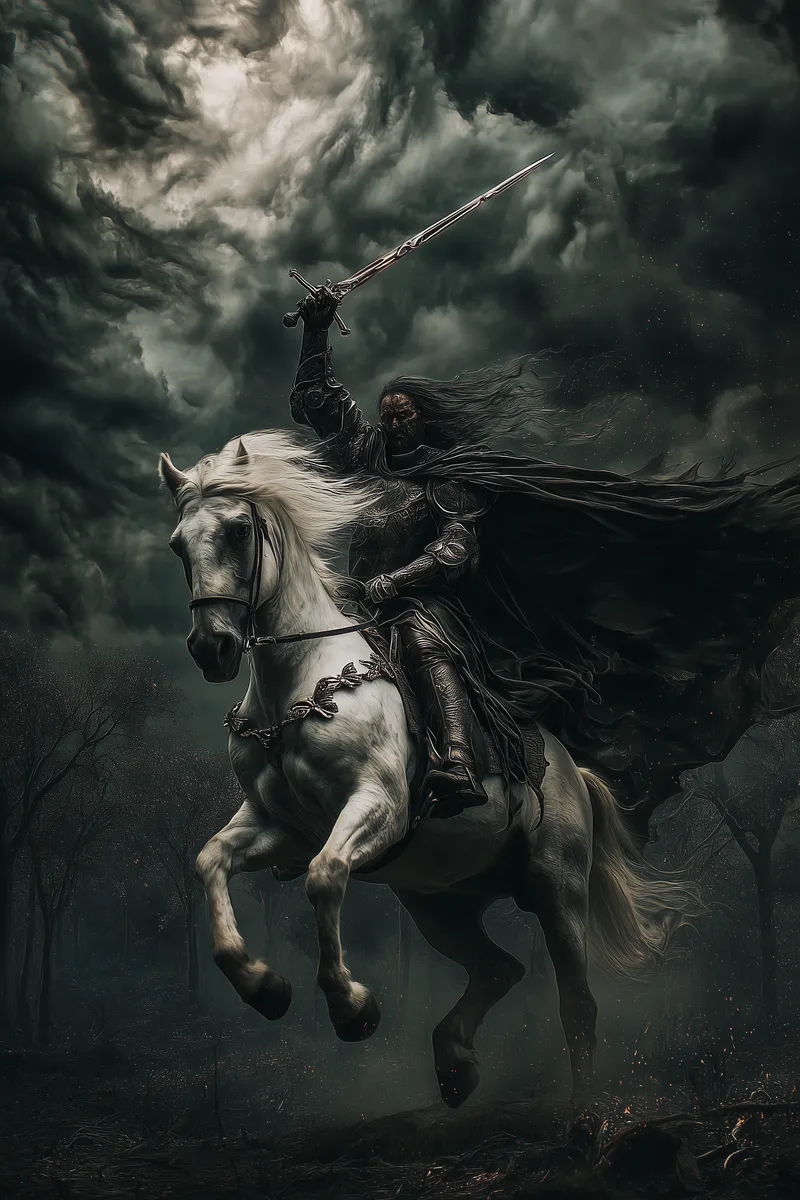
A black knight raises his sword toward the storm as the white horse charges across the ground. The blade has not struck an opponent; it points toward the direction its rider has decided is right. Thought becomes motion, and the world has no time to arrange itself around it. The Knight of Swords describes action when time, pressure, or injustice demands a quick decision. Speed is useful only when the mission, authority, and stopping condition are known. Before riding, ask: What am I trying to prevent or achieve, who could fall beneath the hooves, and what evidence would make me change course? Not everything can be negotiated forever, but determination does not turn an assumption into fact or your urgency into another person's duty. Courage is sometimes an attack. More often, it is keeping hold of the reins even when the storm gives the hero a ready-made soundtrack.
Reversed
Reversed, the horse falls toward the storm, the sword becomes a lightning rod instead of a guide, and the rider treats speed as proof of being right. Urgency narrows the field of vision until every warning looks like an enemy's attempt to slow him down. The reversed Knight of Swords describes uncontrolled momentum, vengeance dressed as justice, or an order no one dares question. It may also show gridlock: energy runs at full power, but action becomes constant argument and repeated launches. Stop irreversible motion. Slow down, verify the facts, and name someone authorized to say stop. If you caused harm, do not explain your intention before recognizing the consequences. A hero without brakes is, from everyone else's perspective, merely a well-dressed accident.