
Cups · 14
King of Cups
Updated 9/3/2026Upright
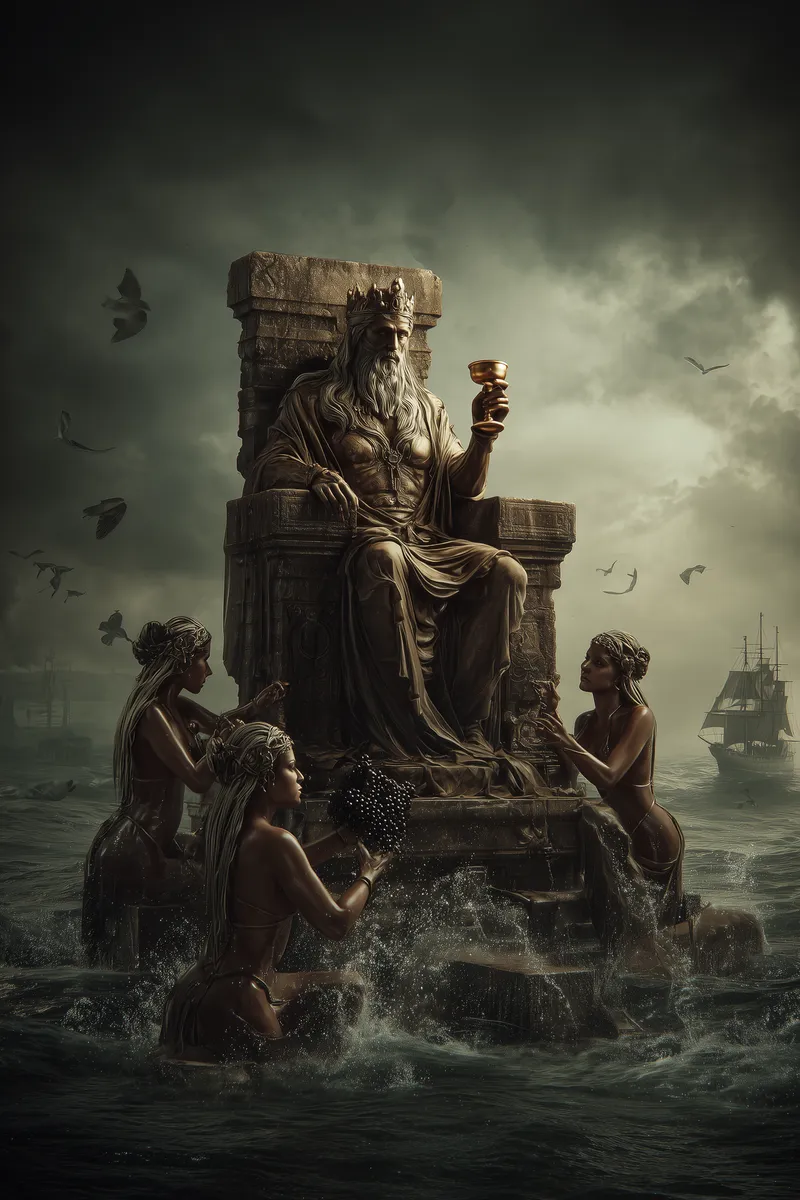
The King of Cups sits on a stone throne amid moving water with his cup raised. His posture is steady, but three figures stand in the waves at the throne's base while a ship remains distant. The image asks whether the ruler's calm comes from self-regulation or other people's invisible labor. Mature emotional authority does not mean silencing the room; it means taking responsibility for your impact even when decision-making power is unequal. When leading a conversation or making a decision that affects others, name the facts, your emotional state, and who will bear the consequences. Hear dissent before deciding, explain your reasoning, and agree on how harm will be repaired. Do not require others to appear calm before they deserve to be heard. The King may hold the cup, but he should know who is standing in the water to keep the throne level.
Reversed
In the reversed King of Cups, the throne looks stable because others stand in the water supporting it. A controlled voice may conceal favoritism, blame, or punitive silence; at times the dam breaks into rage whose aftermath others are expected to clean. Emotional control is not maturity when it is used to control people. A calm face does not make an unreasonable decision fair. Pause decisions affecting others when you are agitated, intoxicated, or seeking revenge. Record what you said, what you did, and who bore the consequence. Ask for feedback from someone allowed to disagree, and repair the harm without explaining how difficult leadership was for you. If someone uses position, money, silence, or threats as control, seek support and protect your options. A stone throne is not the same as a regulated nervous system.